
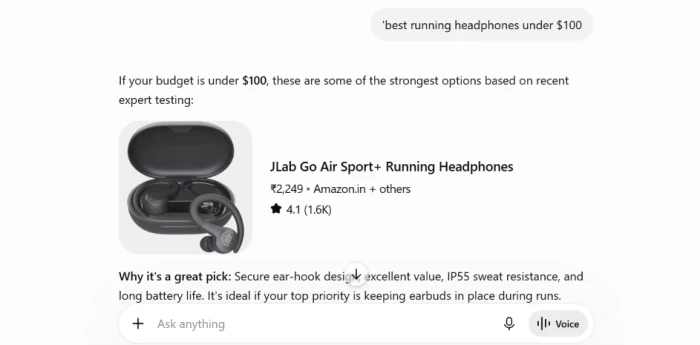
Last month I needed new running headphones. Instead of opening Amazon and scrolling for an hour, I opened ChatGPT and typed a single sentence about what I wanted. Eight seconds later it handed me three picks, each with a short reason attached. The tone was confident, like advice from a friend who happens to know everything about audio gear.
Then I paused.
I had no idea where those picks came from. Were they the best options for me, or the best options for whoever paid to sit at the top? Did the model understand my sweaty, bass-loving, budget-limited situation, or was it matching me to a million other shoppers and calling it personal?
That pause is the reason I wrote this. So here is my honest answer to the question in the title, before I show how I reached it: AI can be trusted to recommend products for certain decisions, and it should never be your only source for the ones that carry weight, such as anything tied to health, money, safety, or a purchase big enough to sting if it goes wrong. The rest of this piece is about finding that line. I will walk through how these systems pick products, where they earn trust, where they lose it, and the exact rules I now follow before I buy anything an algorithm suggests.

What "AI Recommending Products" Means in 2026
Before I judge whether to trust these systems, I need to be clear about what they are, because the phrase covers two different animals.
The first is the quiet kind I have used for years without noticing. It is the 'Recommended for you' row on Amazon, the 'Because you watched' strip on Netflix, the sneakers that follow me around the internet after one curious click. These are recommendation engines. They sit in the background and nudge me toward the next click, based on what I do.
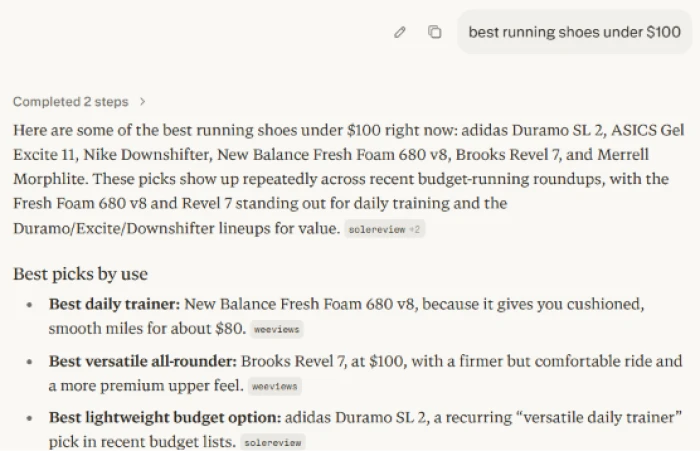
The second kind is louder and newer, and it is the one that made me pause with those headphones. I open an assistant, describe a problem in plain language, and it talks back with specific products and reasoning. ChatGPT reached roughly a billion weekly users in 2026, and its Shopping Research feature builds a full buyer's guide from one request. Amazon renamed its Rufus assistant to 'Alexa for Shopping' in May 2026 and folded it into the search bar. Perplexity, Gemini, Copilot, and a few smaller players all run their own shopping surfaces now.
The shift is not small.
Around 58% of shoppers now say AI tools are replacing search engines for product research. That is more than half of us skipping the old blue links for certain buying questions.
Both types run on the same fuel, which is data about me:
- what I browse, and how long I linger on each thing
- what I have bought and returned before
- my searches, clicks, ratings, and saved wishlists
- quieter signals such as my location and the device I am shopping from
The engine version uses this to guess what people similar to me liked. The assistant version uses it, plus much of the open web, to answer the specific question I typed. That split matters for everything below, because the two kinds fail in different ways, as I will show later.
How AI Decides What to Put in Front of Me
Knowing what these tools are is one thing. Whether they deserve my trust depends on how they reach a recommendation, so here is the machinery, kept simple.
It collects the breadcrumbs
Every tap leaves a trail. A recommendation engine logs my browsing, notes how long I hover on a photo, remembers that I came back to the same jacket twice. None of it feels like surveillance in the moment. Added up over months, it becomes a detailed portrait of me.
It finds patterns
This is where machine learning enters. The system compares my portrait against millions of others and looks for people who behave the way I do. If shoppers who bought my trail shoes also bought a particular pair of socks, the model learns to link the two. It is guessing by resemblance.
It runs one of a few recipes
Most product recommendations come from one of these approaches:
| Method | How it works | Everyday example |
|---|---|---|
| Collaborative filtering | "People like you also liked this" | Amazon's "Customers who bought this also bought" |
| Content-based filtering | "This item resembles things you already like" | Spotify suggesting a song with the same tempo and mood |
| Hybrid systems | A blend of both, plus other signals | Most large retailers and streaming services today |
Simple enough. The label matters less to me as a shopper than the fact that all three are guesses dressed up as suggestions.
It keeps score and adjusts
The moment I click, ignore, buy, or return something, the model updates itself. My 'no thanks' today sharpens tomorrow's guess. This is why suggestions feel sharper the longer I use a service, and also why a brand-new account gets such generic ones, a weakness I come back to below.
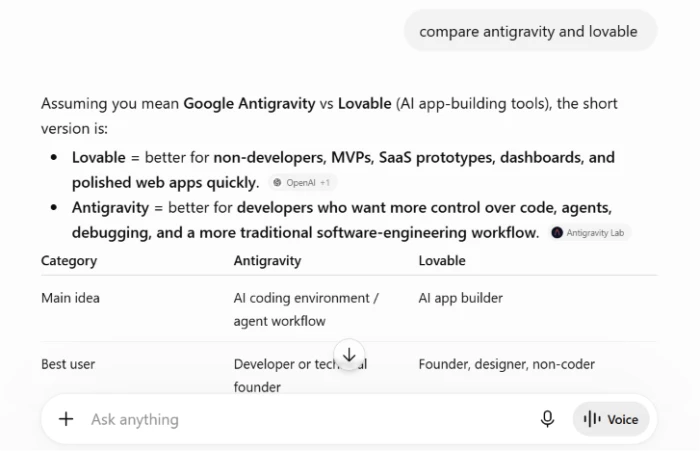
The conversational assistants add one more layer on top. They do not only match me to patterns; they read the words of my request and pull reviews, comparisons, prices, and product pages from across the web to build an answer. That extra reasoning is what makes them feel trustworthy, so that is where I will start.
The Case For Trusting It
I want to be fair to these tools, because they have changed how I shop, and mostly for the better.
- They save me hours. Comparing a dozen products across four sites used to eat an evening. Now one question returns a shortlist in seconds. During the 2025 holiday season, traffic from AI platforms to retail sites grew nearly 700%, and those shoppers converted at 31% higher rates than people arriving from ordinary search, according to Adobe. People are voting with their clicks.
- They explain themselves. This is the upgrade that surprised me most. Older engines just showed me a product and left me to wonder. The newer assistants tell me why. In hands-on testing, ChatGPT and Perplexity break down why one option beats another, and even when a product is wrong for the buyer. An engine that occasionally talks me out of a purchase behaves like an advisor. That earns trust.
- They surface things I would never have found. Two of my favourite buys this year came from a model mentioning a small brand I had never heard of. Discovery is where AI shines.
- They cut decision fatigue. Ten good options can be worse than two, because I freeze. A tight, reasoned shortlist gets me off the fence.
For low-cost, everyday buying, this is close to a solved problem for me. A phone charger, a paperback, a phone case, a cheap kitchen gadget: I take the suggestion and move on, because the cost of a wrong guess is a shrug. The stakes change everything, though, and the next section is where I stopped nodding along.
Where the Trust Breaks Down
Here is the uncomfortable part. The same features that make AI recommendations convenient also make them easy to bend, and once I understood how, I stopped taking any single answer at face value.
The recommendation might be working for someone else
The biggest issue is whose interest the model serves. One analysis of Amazon's assistant found its recommendations were 83% self-serving and only 32% accurate for the shopper. Sit with that gap for a second. A tool can be built to look like it is helping me while quietly steering me toward whatever earns the platform the most money.
Sponsored placements make this murkier. A model trained partly on paid promotions can blur the line between the best product and the one that bought the top slot. That label is easy to miss inside a friendly paragraph.
It can trap me in a bubble
Because these systems feed me more of what I already clicked, they quietly narrow my world. I see variations of the same product and the same price band, over and over. The filter bubble that reshaped social media now shapes my shopping cart.
It can be fooled by fake reviews
Models learn from reviews, and reviews can be faked at industrial scale. If a product carries a thousand planted five-star ratings, the AI may absorb that manipulation and hand it to me as consensus. Garbage in, confident garbage out.
A new account gets worse advice
I flagged this above. With little history to work from, the system cannot personalise, so it leans on the most popular or most promoted items. New shoppers get the least tailored help, which is the opposite of what you would expect. This is known as the cold start problem.
It costs me privacy
All of this runs on my personal data. The more accurate I want the recommendations, the more of my behaviour I hand over. That is a real trade, and I would rather make it on purpose than by default.
It does not understand my life
An algorithm does not know that the headphones are a gift for my brother, who hates anything flashy, or that I am buying a blender at midnight because the old one died before a dinner party. Human context, emotion, the strange specifics of a real situation: these live outside what the model can see. It optimises for the average shopper, and I am never quite the average shopper.
None of this makes the tools useless. It means their confidence is not the same thing as being correct. Only about 17% of shoppers currently trust AI enough to let it complete a purchase, and 79% rank accuracy as their number one demand. The skepticism is healthy, and plenty of people share it.
AI Versus a Human Expert
That last weakness, the missing sense of my life, made me wonder how AI compares to a real expert: the salesperson who has sold cameras for twenty years, or the friend who thinks about cycling gear in the shower. They are not competing on equal terms.
| What I care about | AI assistant | Human expert |
|---|---|---|
| Speed | Instant, any hour | Slow, limited hours |
| Breadth of options | Whole catalogs at once | Only what they know |
| Understanding my situation | Shallow, guessed from data | Deep, can ask and adapt |
| Reading emotion and nuance | Weak | Strong |
| Consistency | Same quality every time | Varies with mood and effort |
| Bias risk | Hidden, baked into training and sponsors | Visible, they may work on commission |
| Cost to me | Usually free | My time, sometimes money |
The table points at something I did not expect when I started writing. The two are strongest in opposite places. AI wins on speed and breadth; a human wins on judgment and context. So the smart move is rarely to choose one over the other. I use the assistant to build a shortlist in minutes, then I take that shortlist to a knowledgeable person, or to independent testing, for the final call. The machine does the wide search. The person does the deep think.
When I Trust AI, and When I Refuse To
All of this collapses into one practical question every time I shop: is this a decision I can safely hand to an algorithm? Over the past year I drew a rough map, and it has saved me from at least two purchases I would have regretted.
The dividing line is stakes.
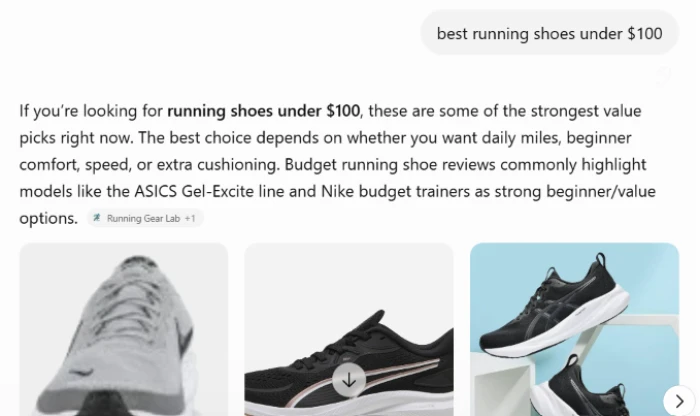
Low stakes, small harm from a wrong answer: I let AI lead. High stakes, real consequences if it is wrong: I treat the AI as a starting point and nothing more.
| I let AI lead | I do my own homework |
|---|---|
| Films and shows to stream | Medical devices and health products |
| Books and everyday household items | Insurance and financial products |
| Gift ideas and inspiration | Baby gear and safety equipment |
| Cheap gadgets and accessories | Expensive electronics and appliances |
| Building a first shortlist for anything | Cars, and anything tied to a legal contract |
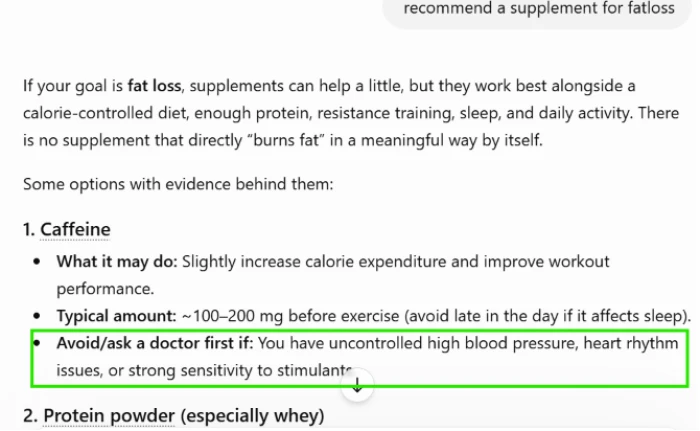
Why the hard line on the right-hand column? A wrong movie pick costs me two hours. A wrong recommendation on a car seat or a health supplement can cost far more, and the model carries none of that risk while I carry all of it. The algorithm does not lose sleep if the blender it pushed catches fire. For those categories I read independent reviews and expert testing, and I usually talk to a real person before I spend a cent.
There is data behind my caution. Bain's 2026 research found that shoppers trust a retailer's own on-site AI three times more than a third-party assistant, and even then, 83% still do not fully trust AI to buy for them. My instinct to keep the big calls in my own hands turns out to be the majority view.
How I Shop With AI Now
The map above tells me when to trust AI. The habits below are how I pull good answers out of it without getting played. None of them take long.
- I ask more than one assistant. ChatGPT, Perplexity, Gemini, and Amazon's assistant draw from different data and reach different conclusions. When two of them land on the same product on their own, my confidence jumps. When they disagree, the disagreement itself tells me to dig deeper.
- I read the reasoning, not just the pick. A product name means little on its own. The why behind it, the trade-offs and the caveats, is where the real information hides. If a model cannot explain its choice, I skip the choice.
- I look for the sponsored angle. Before I accept anything, I ask who profits if I buy it. If the tool showing me the pick also sells ads or takes a cut, I read its advice with one eyebrow up.
- I check independent reviews for anything that matters. For low-stakes buys I skip this without guilt. For anything I will regret getting wrong, I cross-check the AI against sources that are not trying to sell me the thing.
- I guard my data. I adjust recommendation and privacy settings wherever a service lets me, and I accept a slightly less personalised feed as a fair price for handing over less of myself.
- I keep the final call on the big stuff. The assistant narrows the field. I make the decision. That one rule has kept me honest more than any other.
Where This Is All Heading
The version of AI shopping I have described is already shifting under my feet, and the direction is worth a look before I close.
The assistants are learning to act, not only to advise. Google launched a Universal Cart and agentic checkout in 2026, and Amazon's tools can now build a cart and reorder on their own. Perplexity lets its paying users buy in one click through PayPal. The step past 'here is what to buy' is 'I bought it for you,' and that pushes the trust stakes higher. Handing a model my shortlist is one thing. Handing it my card and walking away is another.
- A few shifts could tilt the balance back toward the shopper:
- sharper detection of fake and planted reviews
- explainable AI that shows its sources by default
- privacy-preserving systems that personalise without hoarding my data
- independent agents that compare across every retailer instead of one walled garden
The open question is whether those arrive fast enough to outrun the commercial pressure pushing the other way. For now, the tools are getting more capable and more persuasive at the same time, and persuasion without accuracy is exactly what I have trained myself to distrust.
The Bottom Line
I bought a pair the AI suggested. Before I did, I cross-checked them against two review sites and a friend who runs marathons every spring. They are excellent.
The point is not that the machine got it right. The point is that I did not let it have the last word, and on the decisions that count, I never will.

Comments 0
Join the discussion and share your perspective.
Sign in to post a comment and reply to other readers.
No comments yet
Be the first to share your perspective on this article.