Digen Tested in Real Tasks
Signing Up and Reaching My First Video Without Opening a Single Help Doc
Why I Ran This Test
Reviewner gives Ease of Use a middling 60%, and a recurring complaint in the user data is that the credit system feels confusing. I wanted to see how far a complete newcomer gets on their own, from creating an account to a finished clip, and whether the credit counter actually makes sense the first time you look at it. If a tool is genuinely beginner-friendly, the only thing standing between sign-up and a first render should be a short wait.
What I'm Seeing Here
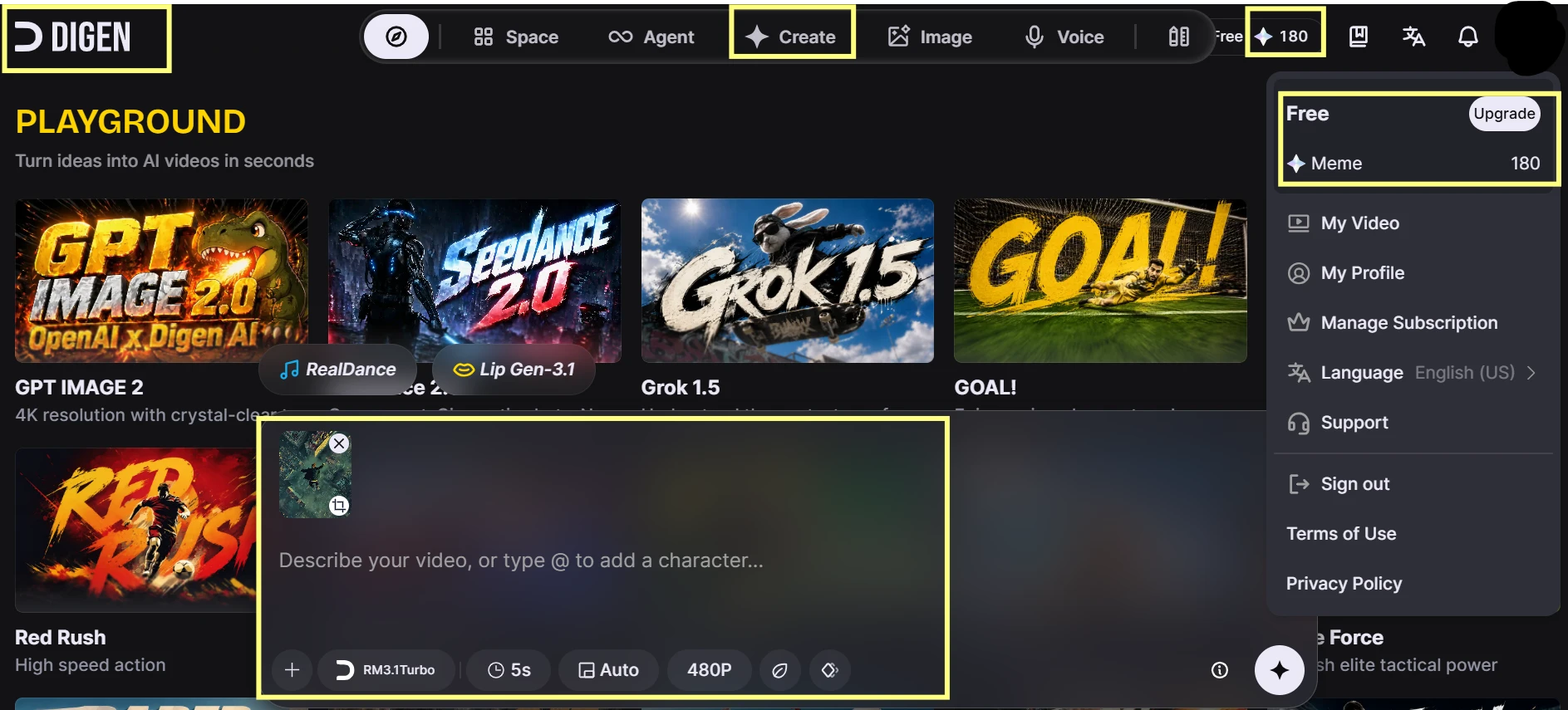
The screenshot above is the Create panel the first time I opened it, before generating anything. The model was already set to model name shown, e.g., Real Motion, with duration on 5s and resolution on 480p and my balance in the top bar read 180 after signing up. I reached this screen without opening a single help article.
What Surprised Me
What I did not expect was the wording around credits: the balance is counted in a unit the platform calls “meme”, so it took me a second to connect 180 free points.
Reader Takeaway
Getting from sign-up to a first generation really is a few-minute job, which fits Reviewner's middling-but-positive 60% Ease of Use score. The friction is not in starting; it is in the credit math. If the unit label and the per-generation cost throw you on day one, spend two minutes working out how many videos your free balance actually buys before you start experimenting, or you will burn through it without noticing.
Creating My First 5-Second AI Video on the Free Plan
Why I Ran This Test
The review says Digen AI can produce strong video results, but also mentions inconsistent quality and slow generation. I wanted to start with the most basic user journey: sign in, write a short prompt, generate one simple clip, and see whether the output feels usable without upgrading.
What I'm Seeing Here
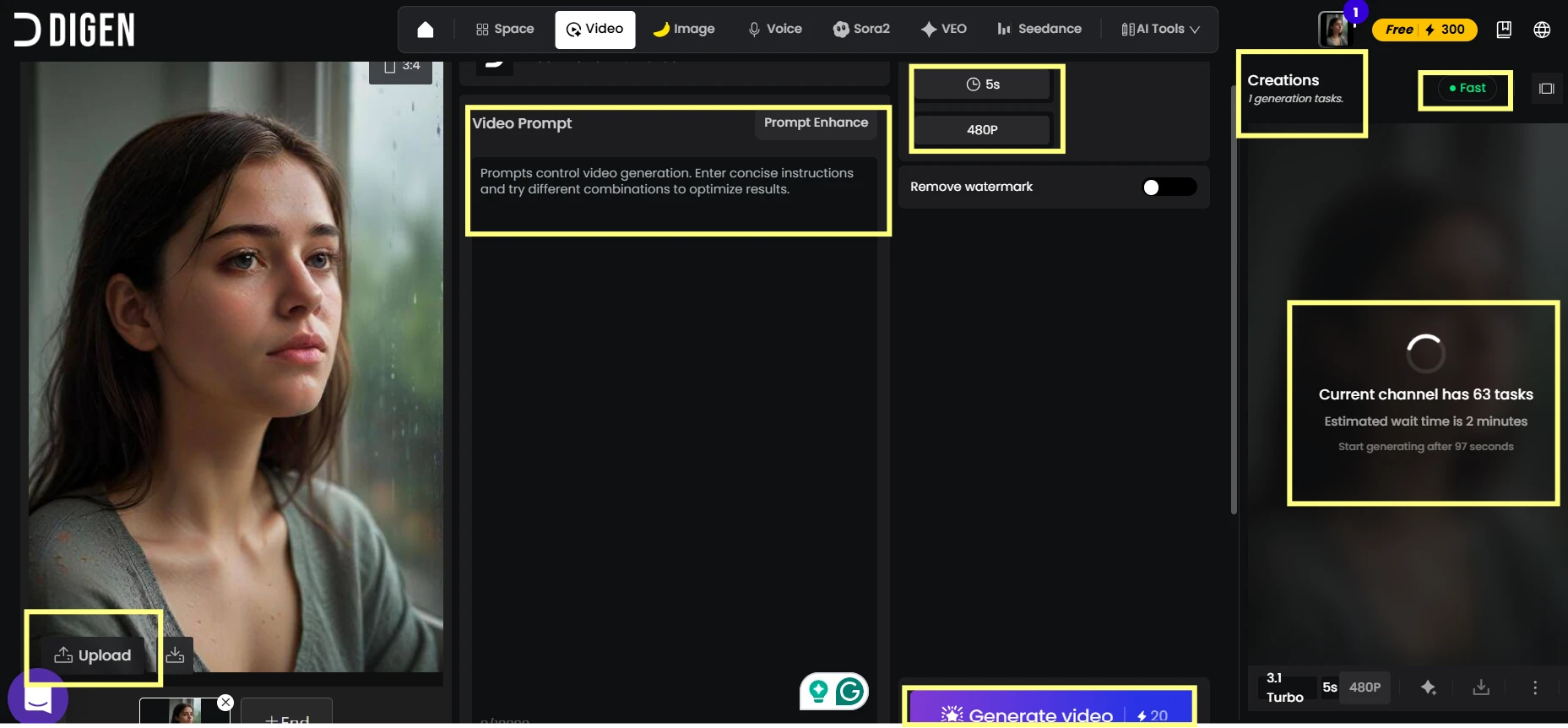
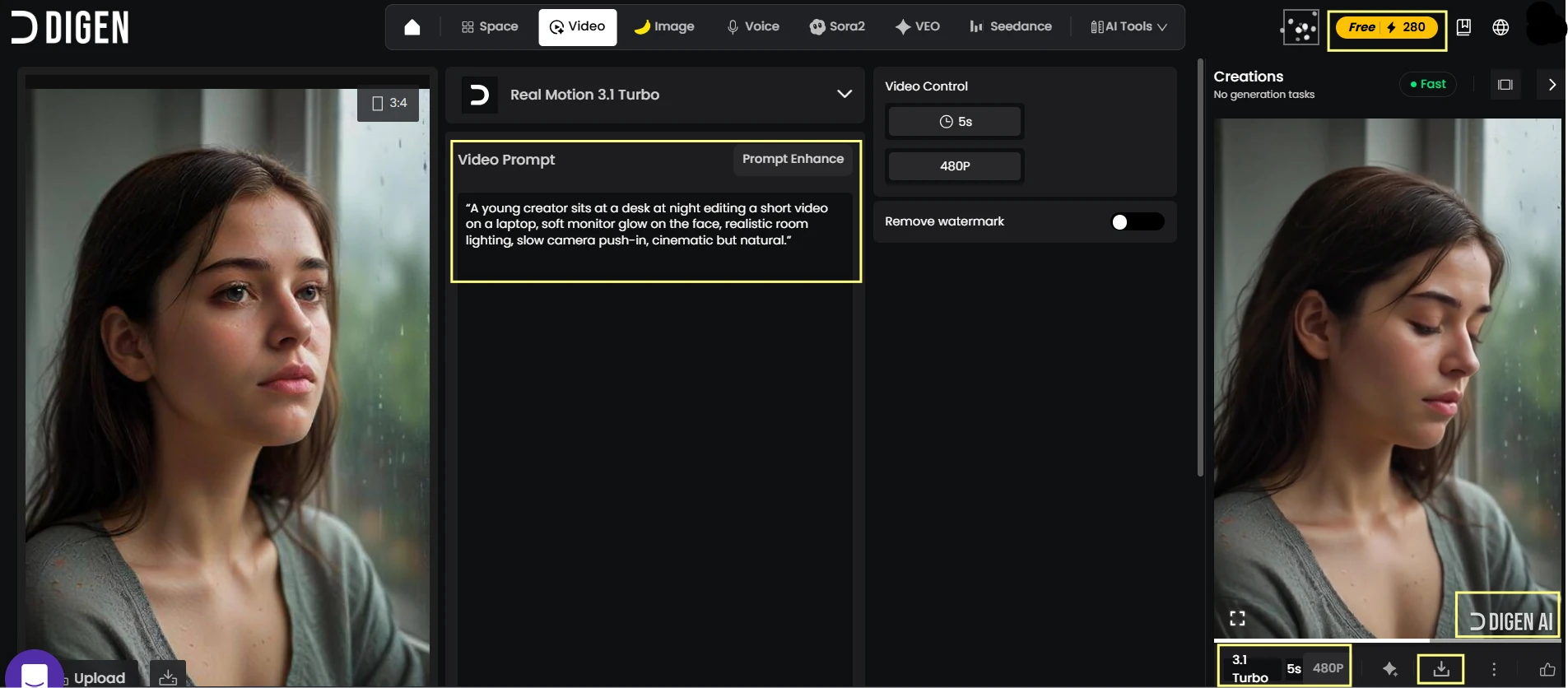
As shown above, I generated a short video from a single text prompt using the free creation workflow. The screen shows the finished video preview inside Digen AI, along with the prompt I used and the basic creation settings around it. In this result, I can see whether the tool kept the night desk setup, laptop scene, and slow cinematic framing visible in the final clip.
What Surprised Me
What stood out to me was how much of the test depended on the queue and progress behavior, not just the final video.
Reader Takeaway
This test checks the review’s output quality and generation speed claims in the most practical way. For a new user, the first 5-second generation says a lot: whether Digen AI feels usable, whether the output follows a simple prompt, and whether free-plan creation is smooth enough to continue testing.
Checking the Multi-Model Hub Without Upgrading
Why I Ran This Test
The review describes Digen AI as a multi-model hub, but also mentions access limits and confusing credit behavior. I wanted to see what a free user actually sees when browsing models, especially around Real Motion, Sora, Veo, Seedance, Kling, and image models.
What I'm Seeing Here
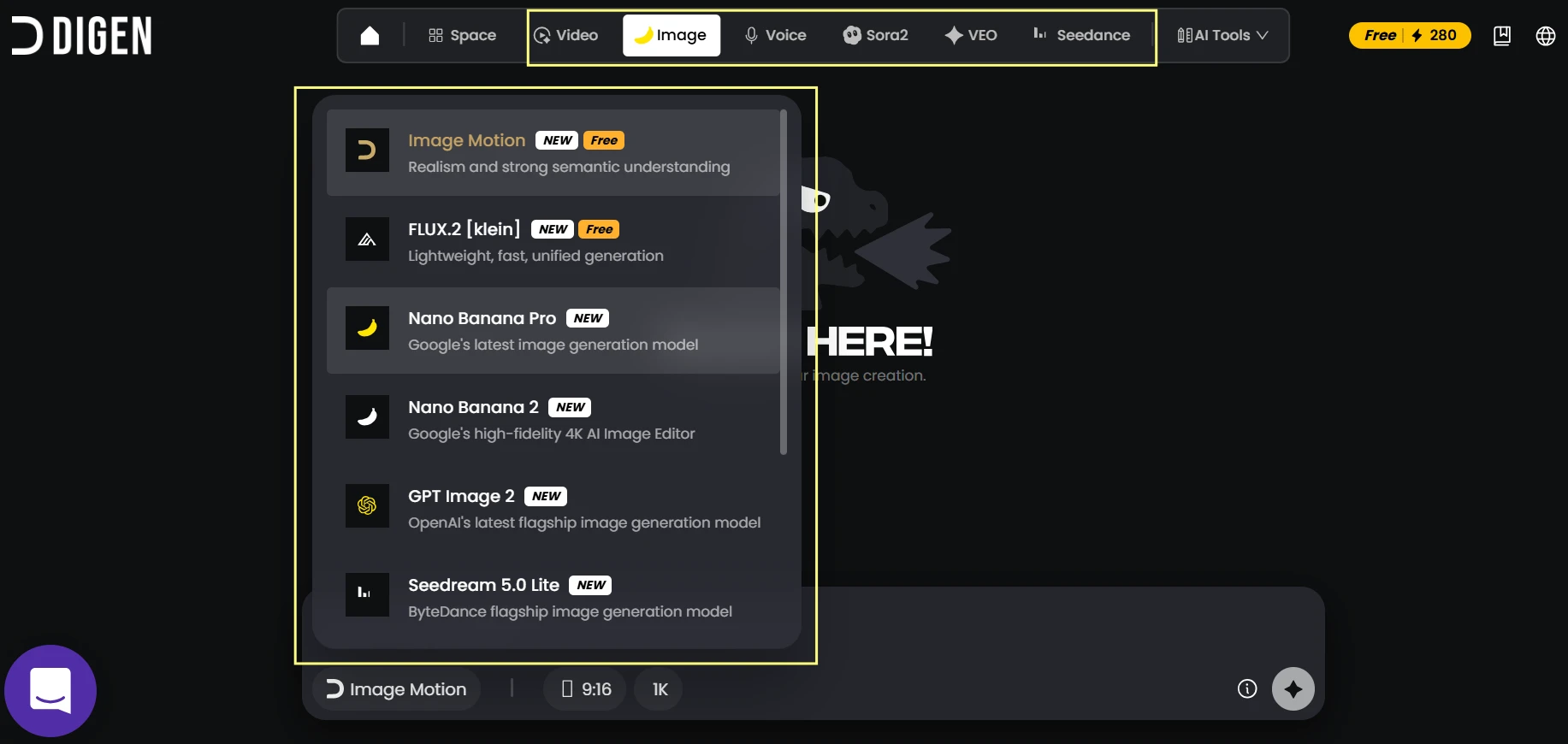
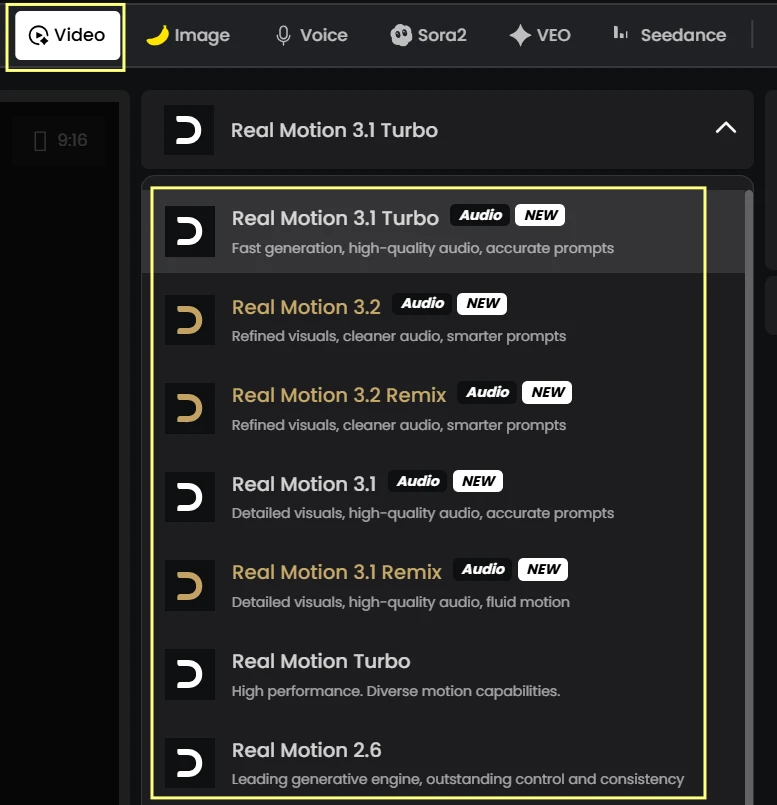
As shown above, the Digen AI workspace lists several creation areas and models inside one interface. I can see the free account indicator, the tool categories, and the model options grouped across video, image, and other creation paths. In this screen, some options appear immediately accessible, while others are presented with upgrade or usage limits inside the same browsing flow.
What Surprised Me
What stood out was how quickly the platform shows its range, but the availability of each option is not equally obvious at first glance.
Reader Takeaway
This test checks the review’s multi-model hub and ease-of-use claims. The platform does offer many routes from one dashboard, but users need to pay attention to which models are actually usable on a free account and which ones sit behind limits.
Saving and Finding Generations Inside Digen Space
Why I Ran This Test
The review mentions Digen Space as a project-management feature that helps preserve generation history. I wanted to check whether a normal user can actually find previous outputs without digging through the interface or losing track of tests.
What I'm Seeing Here
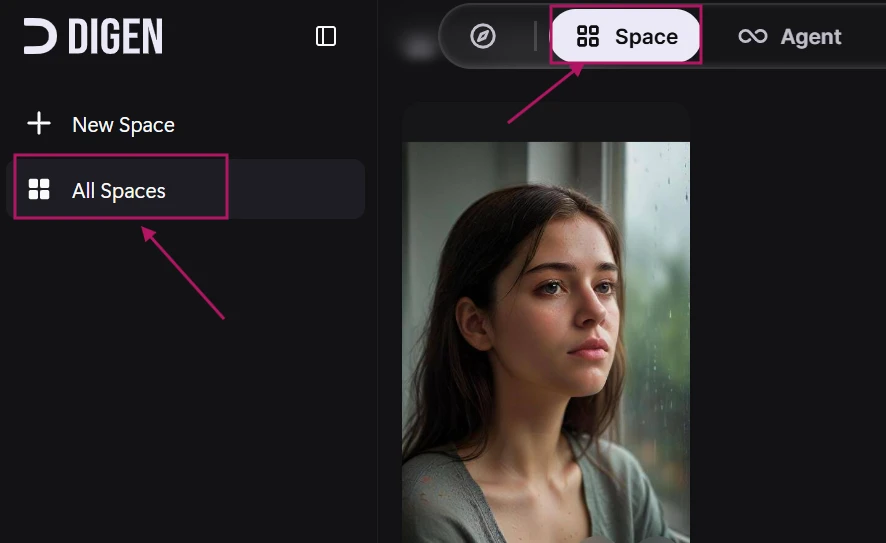
In this screenshot, I’m inside Digen Space after creating test outputs. The visible panel shows saved or recent generations in a workspace-style view, with thumbnails and project elements grouped in one place. I can also see whether the output can be reopened from the history area instead of only being available immediately after generation.
What Surprised Me
This part felt more practical than expected because AI video tests can get messy once several generations are created.
Reader Takeaway
This test checks the review’s claim that Digen Space helps manage project history. For creators comparing multiple prompts or models, saved output organization matters because it prevents the tool from becoming a pile of disconnected generations.