Testing the Pictory AI Video Builder
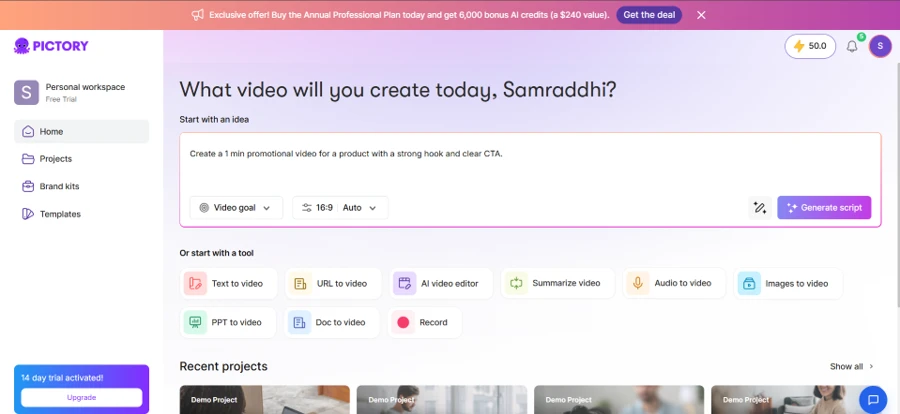
I signed up for the free trial to see how Pictory performs once you move past the marketing page. The account came with 50 credits and a 14 day trial window. The dashboard greets you by name and puts an idea box front and center, with quick tool shortcuts sitting below it.
Text to video, URL to video, PPT to video, and Audio to video sit in that row, along with a few more shortcuts for images and recordings. A promotional banner for the annual plan stayed pinned across the top of my screen for the entire session, worth flagging before the pricing section later on.
Generating a Script
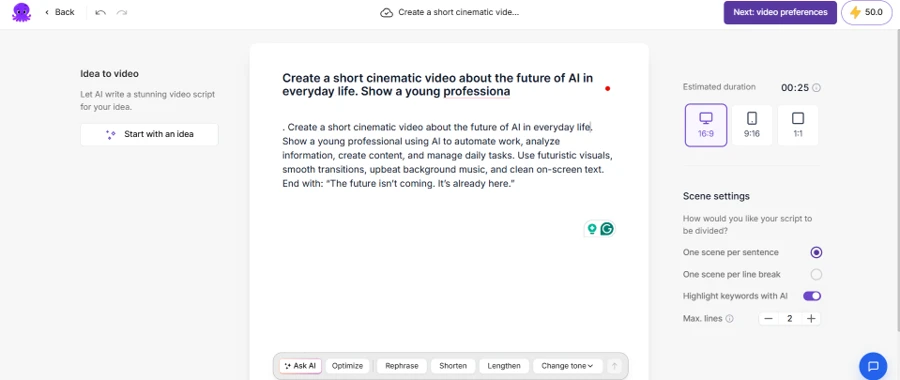
For the first test, I typed a prompt into the idea box and clicked through to generate a script rather than jumping straight into the editor. That single choice mattered more than I expected, and I will come back to it later. Pictory took my prompt, a short brief about AI in everyday life, and expanded it into a full script on its own, adding sentences I never wrote. The scene settings let you choose whether scenes break per sentence or per line, and a toggle highlights keywords for the AI to key off when picking visuals.
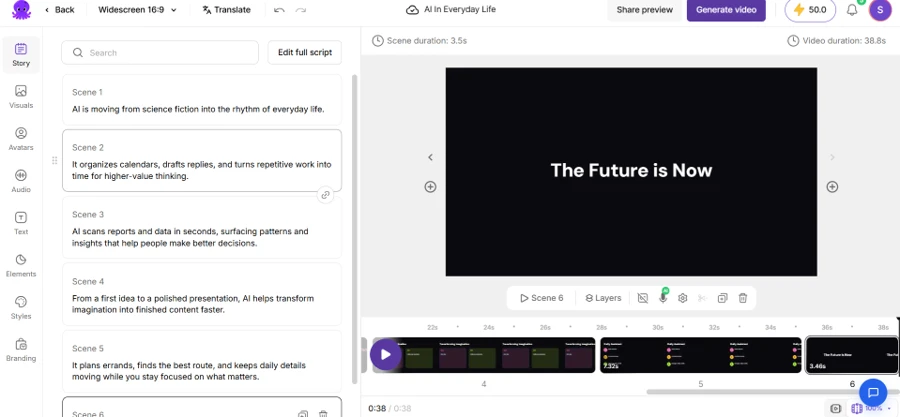
Once I approved the script, Pictory split it into six separate scene cards, one per sentence, each ready to pair with its own visual.
Setting Video Preferences
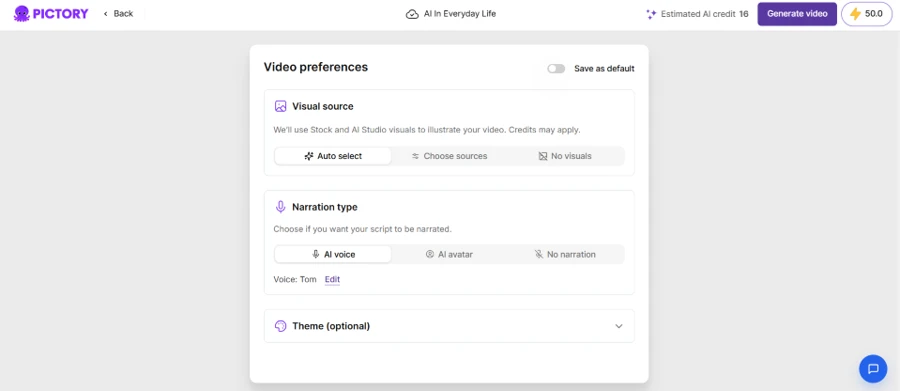
The video preferences screen covers two decisions before generation. Visual source can stay on auto select, pulling from stock footage and Pictory's own AI Studio, or you can lock it to a single source. Narration type offers a plain AI voice or an AI avatar reading the script on camera. You can also turn narration off entirely. A separate dropdown further down lets you apply an optional theme. Pictory calculated the credit cost before I committed, 16 credits for a roughly 40 second video, so the spend is visible up front rather than buried until checkout.
Inside the Editor
The scene editor is where Pictory earns its pitch to people with no editing background. Text overlays live in their own panel, separate from the video canvas, so adding a heading doesn't touch the voiceover underneath it. Basics shapes, stickers, GIFs, and emoji sit under Elements for anything beyond stock footage. Styles applies a full color palette across one scene or the entire project in a single click.
Swapping in an AI avatar triggered a popup I hadn't expected, asking whether to keep my current narration voice or replace it with the voice bundled to that avatar.
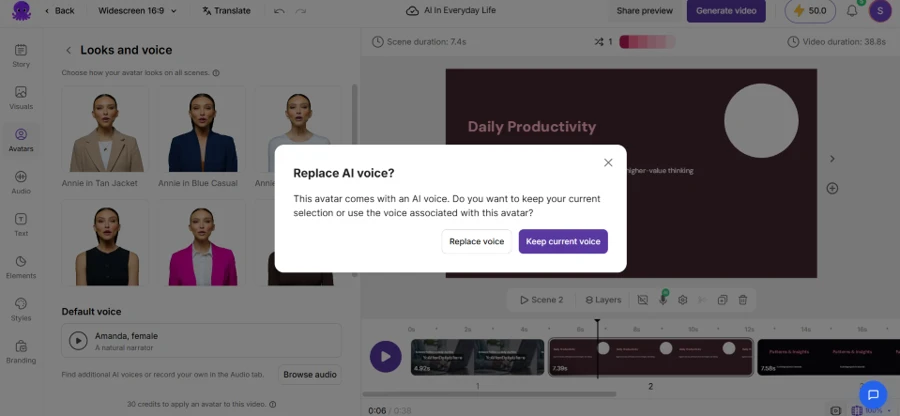
That one popup saved me from an accidental voice change I would have had to notice and undo later. The avatar library itself is a short, scrollable set of stock presenters, each with a name and a look, not a character built from scratch.
Testing How Pictory Handles Language
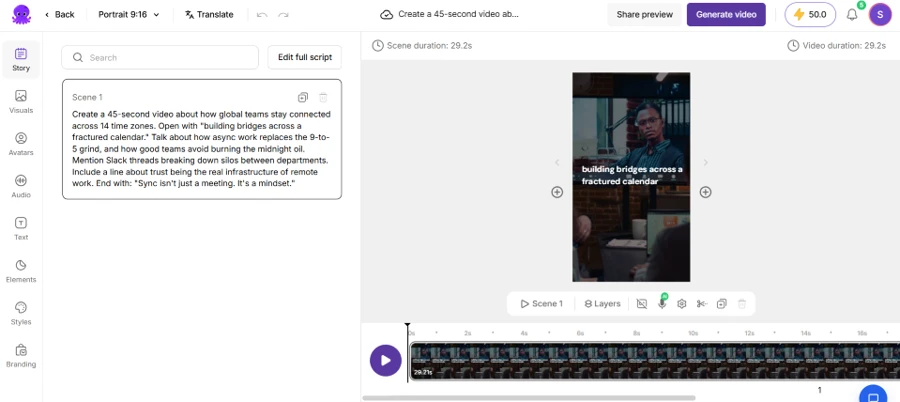
This is where I wanted evidence rather than a guess. I wrote two scripts on the same topic, global teams working across time zones, and ran each one through Pictory on its own. The first leaned on idiomatic language rather than plain description, phrases like building bridges across a calendar and burning the midnight oil, with trust itself framed as infrastructure. For that run I skipped the script generation step by mistake and went straight into the editor. Pictory treated the entire paragraph as a single scene lasting 29 seconds. It picked one stock clip of a video call montage and held it for the full 29 seconds, regardless of what the script said next.
The opening line, building bridges across a fractured calendar, showed up as literal on-screen text over a different clip the second time I ran the same prompt, a single man sitting at a desk in what looks like a brick-walled office. Neither shot shows a bridge, a calendar, or anything resembling a global team.
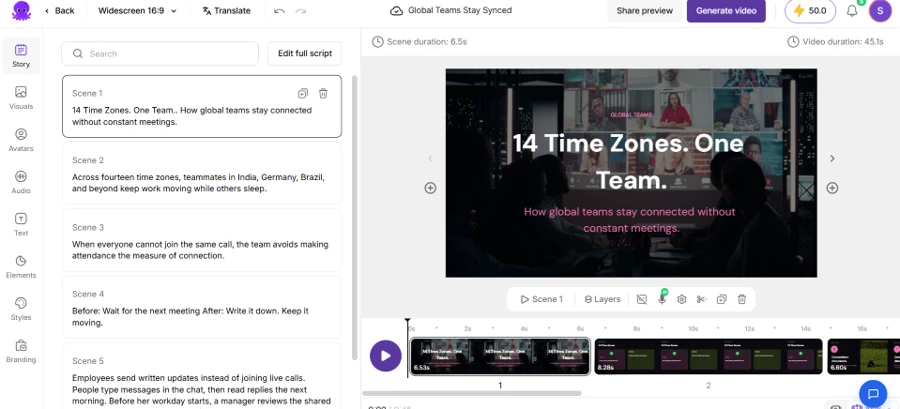
The second script told a different story, though not the one I expected walking in. I ran it through the script generation step properly this time, and it split into six scenes as intended. Scene one pulled real footage, people in what reads as a team meeting, overlaid with the line 14 Time Zones. One Team. That felt accurate.
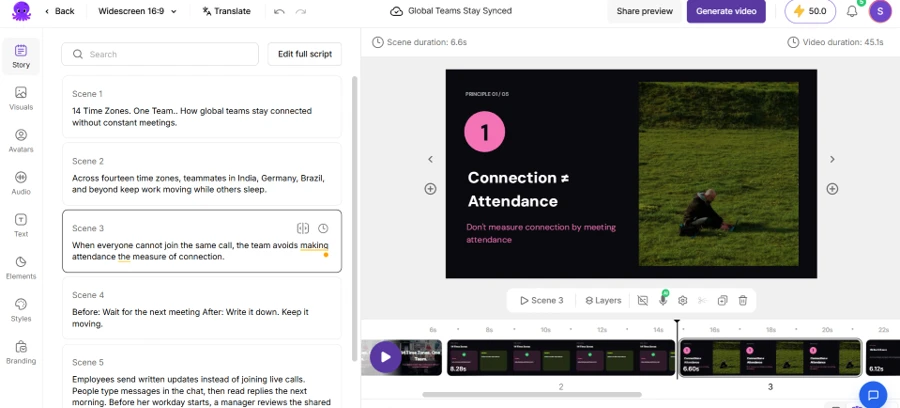
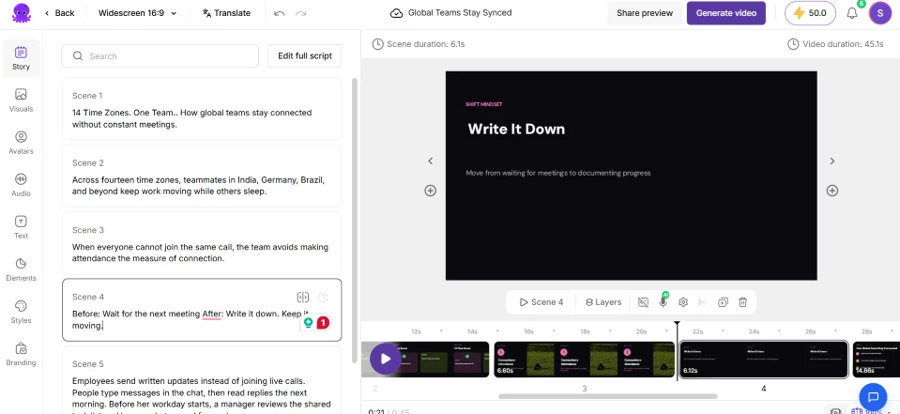
Scenes two through six mostly abandoned stock video. Instead of searching for footage matching lines like employees send written updates or a manager reviews the shared task list, Pictory generated flat graphic cards. One scene turned into a checklist titled Practices. Another became a black title card reading Write It Down, with no visual at all behind the text. A third did use a photograph, a single person crouching in a field of grass, paired with a line about not measuring connection by meeting attendance. Nothing in that photo relates to the sentence sitting above it.
Duration held up well across both tests. The literal script estimated 46 seconds and rendered at 45.1 seconds, a gap small enough that I wouldn't plan a script around it.
Checking the Pricing Page
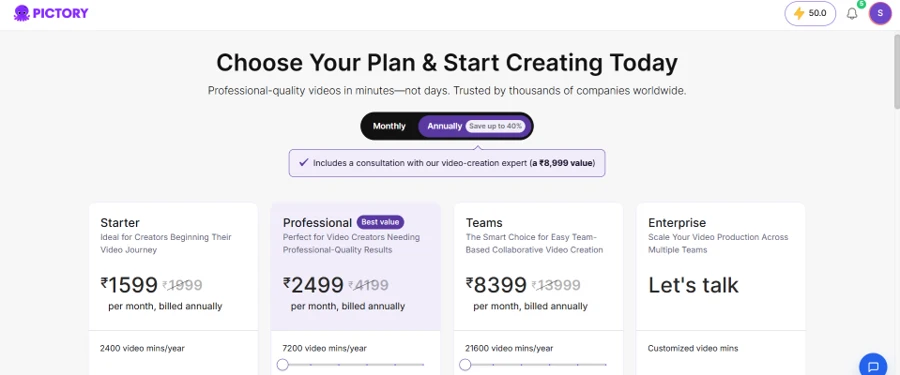
Credits kept surfacing throughout testing, so I opened the pricing tiers to see what they cost outright. Four plans are listed. Starter runs ₹1,599 a month, Professional sits at ₹2,499 and carries a best value tag, Teams costs ₹8,399, and Enterprise pricing is custom. Every price on the page reflects annual billing by default, with a higher struck-through number sitting beside it. A banner above the tiers advertises a free consultation described as an ₹8,999 value, a common way to make a mid-tier plan look more generous than its raw feature list suggests.