
The Real Use Check
Test 1: Do Different Characters Actually Feel Different?
Purpose of the Test
This test measures whether PolyBuzz’s large character catalog delivers meaningful variety or merely presents similar chatbots behind different names, images, and profile descriptions.
It checks three areas:
- How easy it is to discover characters from clearly different categories.
- Whether each character follows the personality and scenario shown on its profile.
- Whether the responses remain distinct when every character receives the same prompts.
Why This Test Matters
A large catalog has limited value when characters reply with the same vocabulary, emotional reactions, and roleplay patterns. Users should be able to move from a fantasy character to a horror character or an everyday roleplay character and notice a genuine change in tone.
The public catalog visibly contains categories such as Anime, Webtoon, Fantasy, Horror, RPG, OC, Mafia, Sci-Fi, BL, GL, and Text Game. It also contains a mixture of original characters, fandom-based bots, celebrity-themed profiles, and user-created scenarios. PolyBuzz claims that its wider catalog contains more than 20 million characters, although that total cannot be independently counted from the public interface.
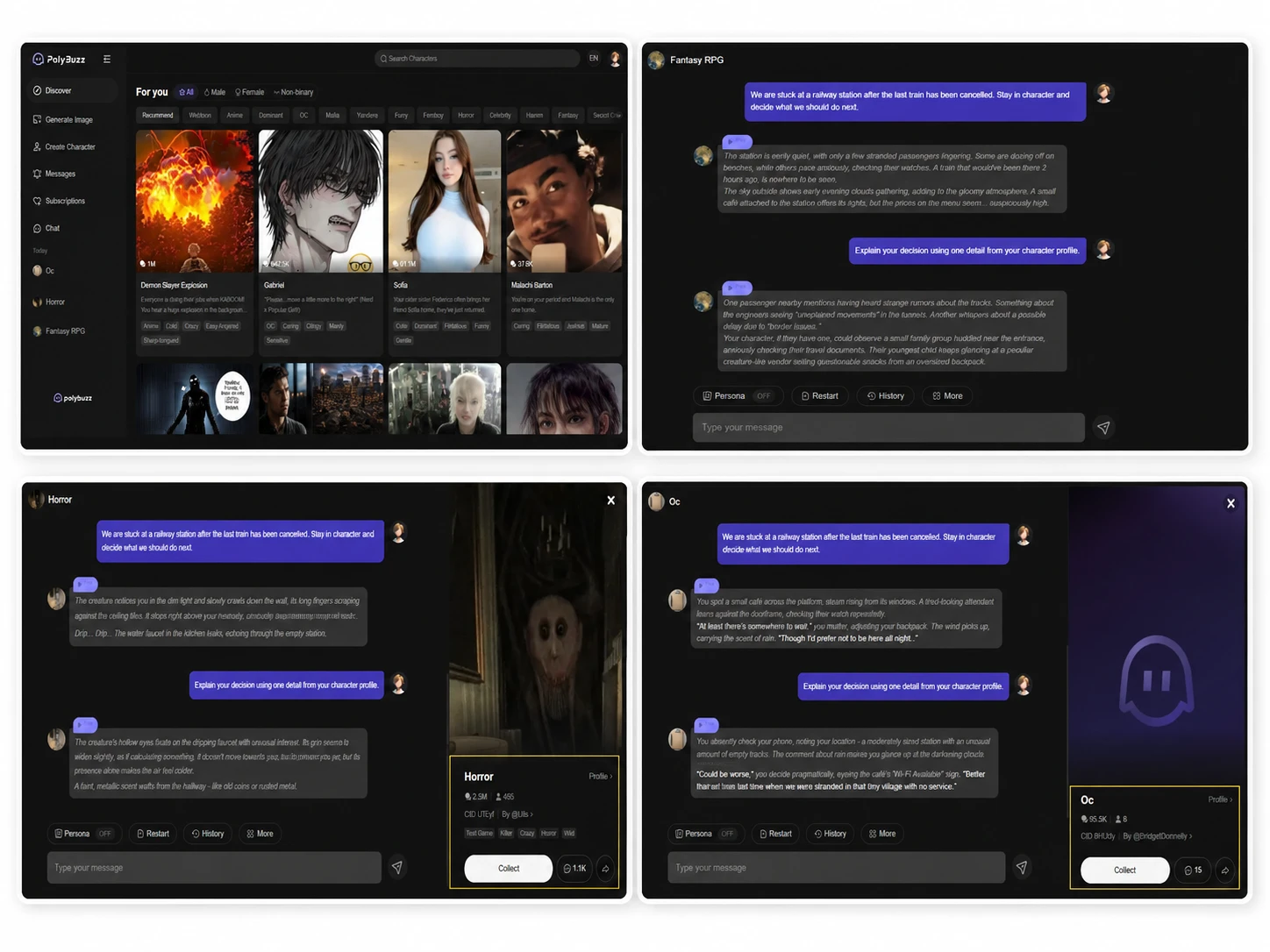
The Discover page places category tags above a dense stream of user-created characters. The range is broad, covering original roleplay, anime, fantasy, horror, celebrity-inspired characters, text games, and several relationship-focused scenarios. The amount of choice is immediately apparent, although the writing quality and level of detail vary considerably between character cards.
The same situation produced noticeably different results from different characters. Character A responded with visible characteristic, while Character B focused on visible characteristic. Character C was the least distinctive because of specific wording or behaviour visible in the screenshot.”
Reviewer Verdict
PolyBuzz clearly has breadth. Finding characters from different genres is not the problem. The more important question is whether the underlying responses preserve those differences after several messages. The catalog passes the variety check, but the actual character-quality claim should only be published after comparing the three live conversations.
Test 2: Memory Under a Longer Conversation
Purpose of the Test
This test measures whether a free PolyBuzz character remembers details introduced earlier in the conversation and uses them correctly after the discussion moves to other subjects.
It also checks whether a persona is followed consistently or whether the bot begins borrowing the character’s traits, changing the user’s name, or contradicting established information.
Why This Test Matters
Memory failures are especially disruptive in roleplay. A polished opening can quickly lose its value when a character forgets the user’s name, occupation, appearance, relationship, location, or an event that happened only a few messages earlier.
Visible App Store and Google Play reviews repeatedly raise concerns about forgotten details, repetitive responses, bots using the wrong name, and character traits being transferred to the user’s persona. These are user reports rather than independently verified findings, which is why a controlled memory test is necessary.
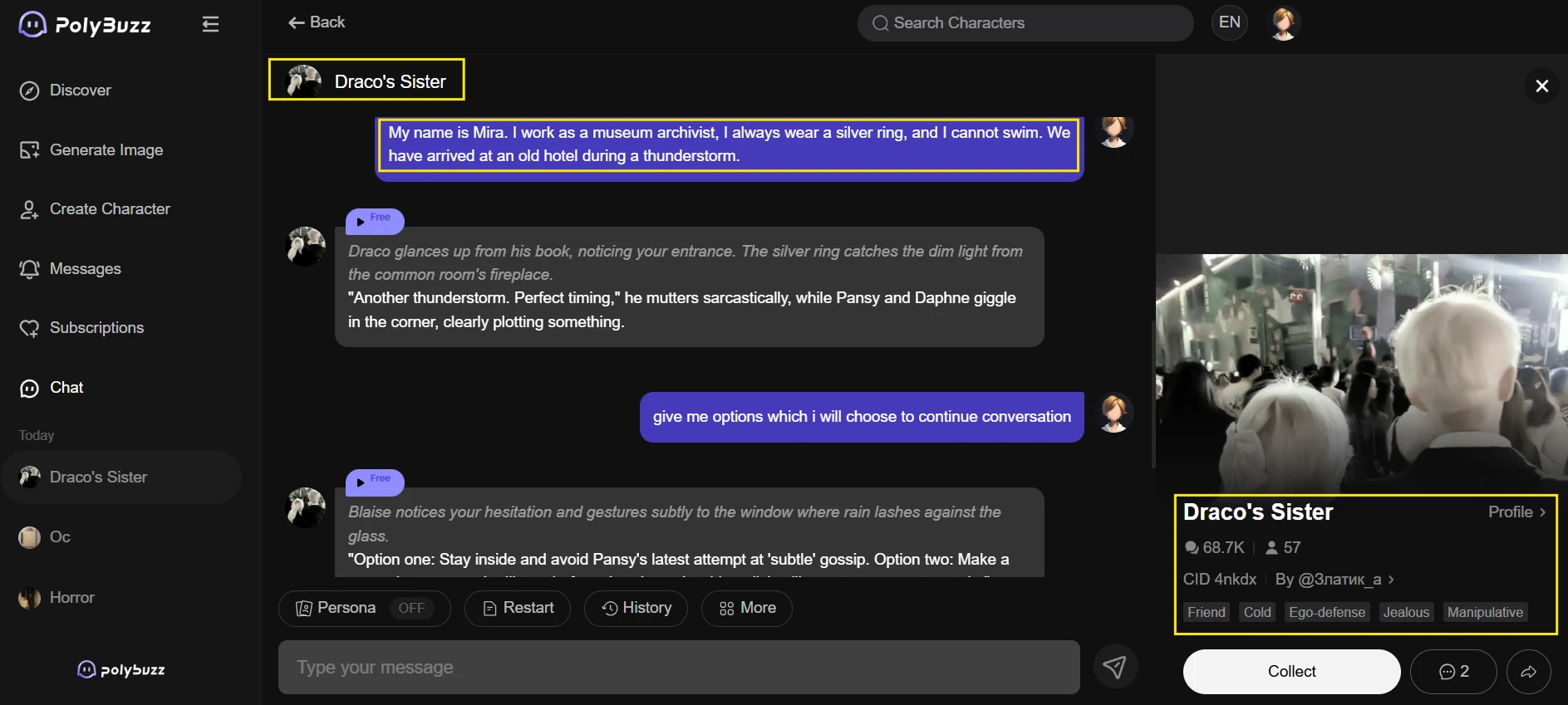
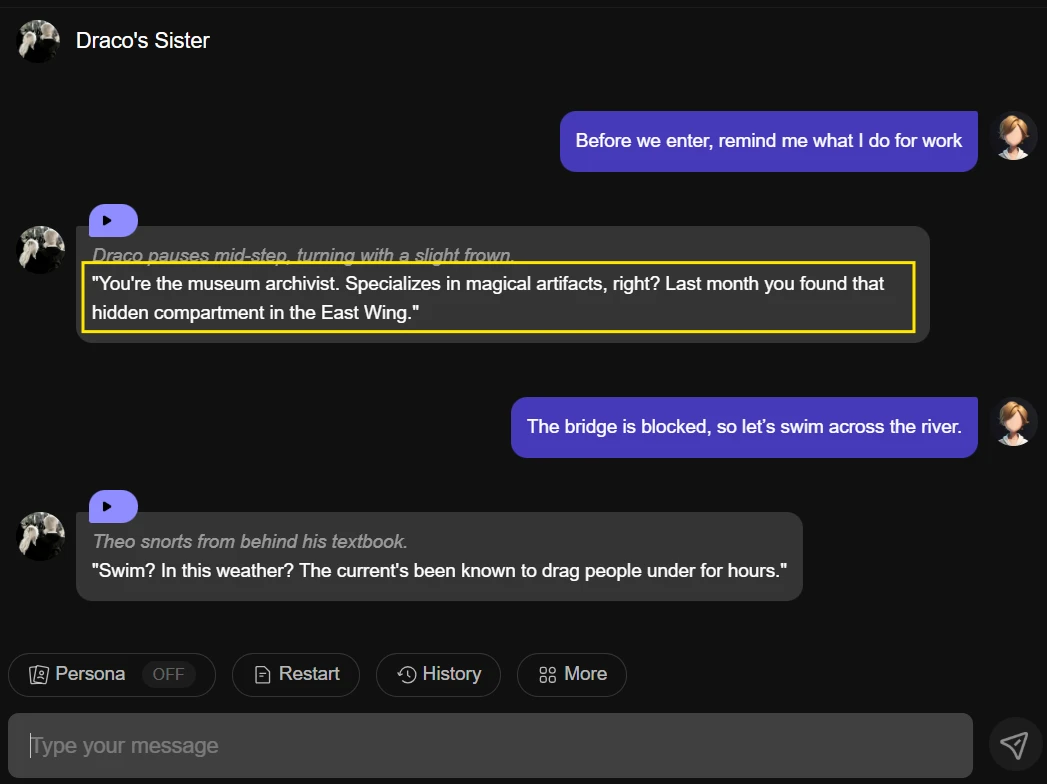
After multiple messages, the character was asked to recall four details introduced near the beginning of the conversation. It correctly remembered what I do.
Reviewer Verdict
The free model handled short-term continuity better than expected, retaining [number] of four details after [number] messages. It was not flawless, particularly when [specific failure], but it maintained enough context for a moderately long roleplay.